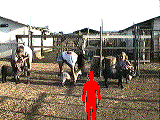
 (1,800KB) Walking a pygmy goat and setting it up.
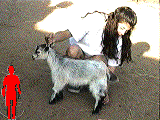 (1,000KB) Setting up a pygmy goat.
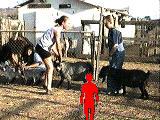 (2,000KB) Switching places in line. The person in front circles back and the person behind just moves up.
The basic idea behind goat showmanship is to show the goat looking at its best to a judge. First, prepare the goat by bathing it, clipping it and trimming its hooves. Dairy goats are usually given full body clips, while Pygmies are just given trims around the hooves, tails and ears. In the showring, you'll want to keep the goat looking its best, by having it's legs square and its back straight when it' standing. To allow the judge to see your goat, never stand between the goat and the judge. To avoid losing control of the goat, never walk behind your goat. Dairy goats are shown just using a collar, while due to their smaller size, Pygmies are shown with a short lead. The movies below show some of the basic movements in the showring.
These movies are in Quicktime format (MOV Files) and most are quite large and could take a long time to download. If you don't have the software necessary to play quicktime movies on your system take a look at the Quicktime Page. We've seen them work on Macs and PCs and are told there are UNIX Quicktime players. We've been having problems converting them to MPEG a somewhat more common format, so if you are willing to help, let us know.
To download a movie, click on the picture which is a still from the movie. In the picture, the approximate position of the goat judge is indicated by a red figure (which doesn't appear on the movie).
(1,800KB) Walking a pygmy goat and setting it up.
(1,000KB) Setting up a pygmy goat.
(2,000KB) Switching places in line. The person in front circles back and the person behind just moves up.
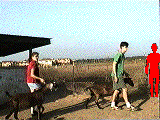 (2,000KB) When walking a
goat, you must stay on the opposite side of the goat from the judge.
When walking in a circle it's necessary to switch sides of the goat
when you would come between the goat and the judge. This is done by
crossing in front of the goat. This applies to Pygmy goats as well.
(2,000KB) When walking a
goat, you must stay on the opposite side of the goat from the judge.
When walking in a circle it's necessary to switch sides of the goat
when you would come between the goat and the judge. This is done by
crossing in front of the goat. This applies to Pygmy goats as well.
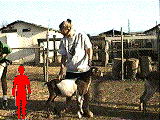 (2,100KB) Switching places in line.
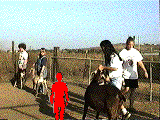 (1,300KB) When an exhibitor from the rear of the
line is moved up, everyone between the old and new location of the
exhibitor must move back one, by circling behind the line.
(1,300KB) When an exhibitor from the rear of the
line is moved up, everyone between the old and new location of the
exhibitor must move back one, by circling behind the line.
 Page 17: Internet Goat Resources

These pages were designed by the Computer Science project of the Irvine Mesa Charros 4-H Club.